
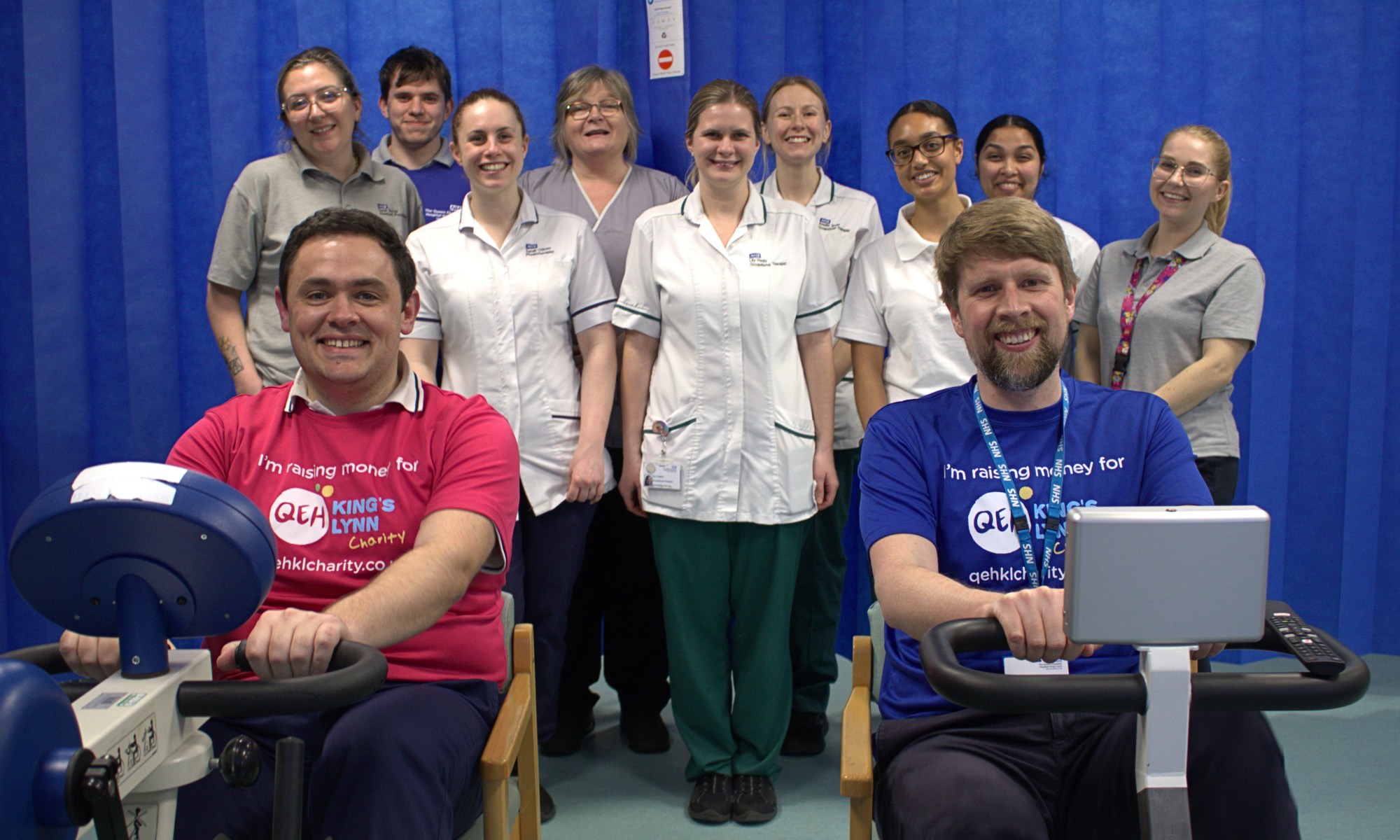

The Stroke Unit team has launched the second stage of its equipment appeal by challenging patients and staff to collectively cycle 979 miles using a newly funded specialist exercise bike. So far, they have completed 110 miles and hope to raise £10,000 through sponsorship for the remainder of the challenge.
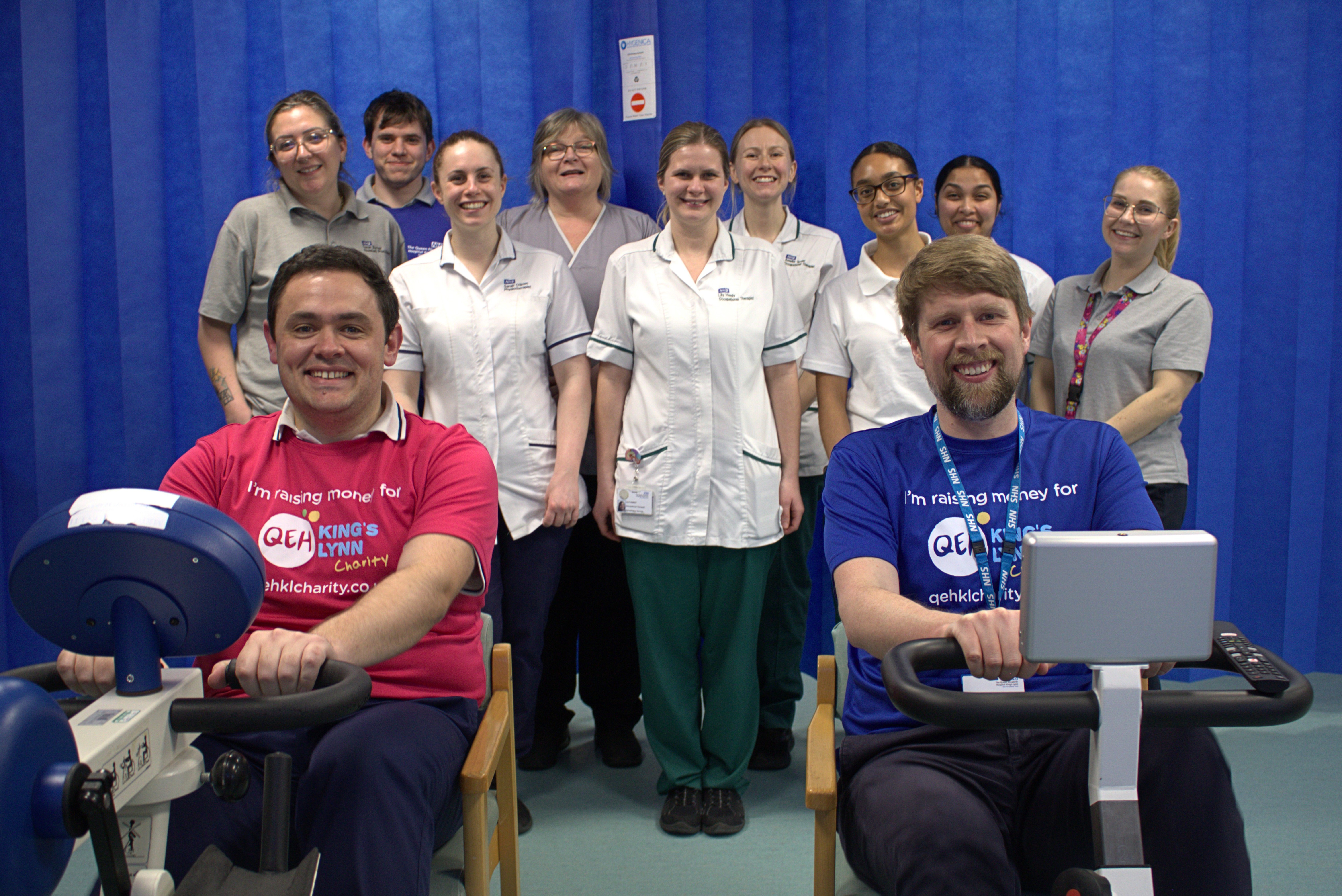
The adaptive exercise bike – purchased using money raised by the ward team during a sponsored 57‑mile hike across the Norfolk coast in October – is already playing a valuable role in patient rehabilitation. Suitable for both ambulatory and wheelchair users, it enables stroke patients to increase mobility and improve flexibility in their arms and legs.
John Syson, a keen cyclist and Director of People at The QEH, was one of the first to get into the saddle of the adaptive bike to kickstart the fundraiser with West Raynham staff.
After notching the first mile on the race clock, he said: “It was great to be involved in launching the appeal with the team and experience the benefits of the new bike and what a difference it makes for stroke patients. It’s wonderful that the hospital’s QEHKL Charity is supporting the ward appeal for more specialist equipment and I am sure that together staff and patients will complete their long-distance challenge.”
Scott Ablett, Senior Physiotherapist, pictured with John at the launch, said: “Now we have this new equipment we’re able to put it to good use. By involving patients directly in our Land’s End to John O’Groats challenge, we hope to motivate them throughout their physiotherapy and encourage them to go a little further each time.”
With the bike in place, the ward’s fundraising focus has shifted to creating an aphasia library. This dedicated space will provide accessible reading materials designed to support speech, language and cognitive recovery. Aphasia is a condition that affects a person’s ability to speak, read, write and understand language, and is often caused by stroke or brain injury.
Ella-Louise Hamilton, Speech and Language Therapist, said: “Following a stroke, damage to the language centres in the brain can result in aphasia, affecting a person’s ability to understand language, find words, read or write. Reading can play an important role in recovery, as well as offering social and emotional benefits.
“We would like to create a dedicated reading space for patients on West Raynham with material suited to different levels of ability. This will allow us to provide appropriate resources that support language therapy and help patients regain confidence.”
Funds raised through the virtual cycle will be used to purchase materials for the new aphasia library, supporting both the rehabilitation and wellbeing of stroke patients.
To support the appeal for The QEH Stroke Unit’s new aphasia library, please visit www.qehklcharity.co.uk/about/current-appeals/
End
Notes to editors;
To download the full media release pack, please click here
If you would like to raise funds for good causes or help an appeal at The Queen Elizabeth Hospital, please take a look at our website www.qehklcharity.co.uk. Alternatively, please email our Charity team at Charity@qehkl.nhs.uk or call 01553 613309.
For media enquiries only, please contact Communications Team, media.enquiries@qehkl.nhs.uk or 01553 613216.
For all other enquiries, please contact QEH Switchboard on 01553 613613.
About QEHKL Charity: QEHKL Charity plays a vital role in supporting The Queen Elizabeth Hospital in King’s Lynn. The charity raises funds for medical equipment, research, services, and facilities that directly benefit patients and their families. With its support, QEHKL can provide high-quality care, expand services, and improve the hospital experience for those in need.
 QEH Media Hub