
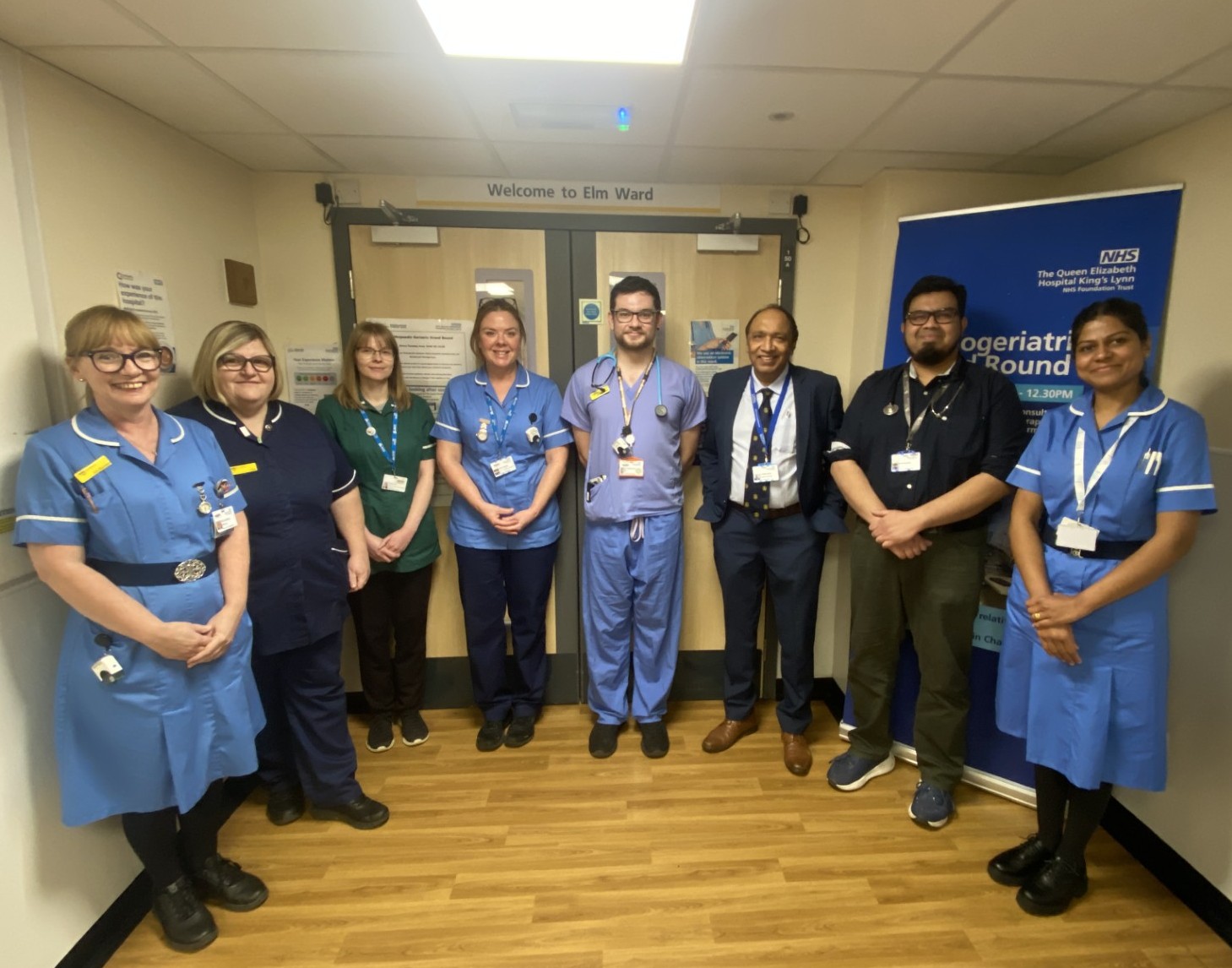

More than 150 patients have now taken part in the POP‑I (Perioperative Iron and EPO Intervention) study at The QEH, meaning The QEH has recruited over 10 per cent of the entire national trial cohort across 42 participating centres.
The POP‑I trial, led nationally by the University of Nottingham, is focused on improving recovery outcomes for older patients aged 60 and over who are admitted as emergencies with hip fractures and anaemia.
It is investigating whether intravenous iron, a synthetic hormone – erythropoietin (EPO) or standard care leads to better outcomes – speeding recovery, reduce complications and improve quality of life after surgery.
Hip fractures are one of the most serious injuries affecting older people, often leading to long hospital stays, loss of independence and ongoing health challenges.
By taking part in this research, patients at The QEH are contributing directly to evidence that could influence national standards of care for this vulnerable group.
The Trust’s recruitment success reflects a strong commitment to offering patients the opportunity to take part in high‑quality research alongside their routine care.
Over a 13‑month period, teams at The QEH recruited an average of nearly 12 patients per month, a consistently high rate that sets the Trust apart from many longer‑established research sites.
The study is led locally by Dr Pradip Sarda, Consultant in Care of the Elderly and Principal Investigator for POP‑I at The QEH, supported by a highly committed multidisciplinary team. Research nurses Debbie Wilding, Tracy Fuller, Anna Peters and Kim Bloomfield have played a key role in supporting patients and families through the research process, ensuring participation is safe, informed and centred on individual needs.
Strong engagement from Associate Principal Investigators and ward teams, particularly on Elm Ward, has also been central to the study’s success.
A presentation delivered by Dr Rehan Ranadive at the national POP‑I meeting in June highlighted both The QEH’s results and its growing research culture on a national stage.
Tom Dymond, Lead for Research and Innovation at The QEH, said: “This achievement is ultimately about patients. Becoming the top recruiting site across 42 centres shows that people receiving care at The QEH are not only benefiting from research‑active services but are actively helping to improve care for future patients across the NHS.”
He added: “Embedding research into everyday clinical practice means patients can access innovative studies close to home, without additional burden. The leadership shown by Dr Sarda, alongside the dedication of our research nursing and clinical teams, demonstrates how powerful research can be when it is truly patient‑focused.”
Rebecca Martin, Medical Director at The QEH, said: “This achievement reflects the exceptional commitment of our clinical and research teams to delivering high-quality, patient-centred care. Becoming the top recruiting site for a national study of this importance demonstrates how research at The QEH is integrated into everyday clinical practice. Most importantly, it shows how our patients and staff are working together to help shape better outcomes for older people with hip fractures, both locally and across the NHS.”
Ends. Notes to editors; For media enquiries only, please contact Communications Team, media.enquiries@qehkl.nhs.uk or 01553 613216. For all other enquiries, please contact QEH Switchboard on 01553 613613.

